The Glove Illusion: What I Witnessed at Lunch
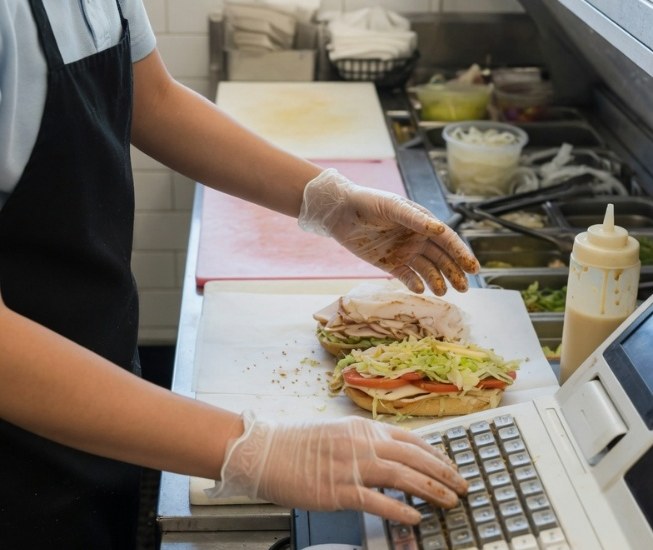
Gloves can make a food counter look clean. But when the same pair touches cash, a register, a phone, and then your food, cleanliness becomes an illusion. The “glove illusion” happens when one pair of gloves moves from the register back to ready-to-eat food.
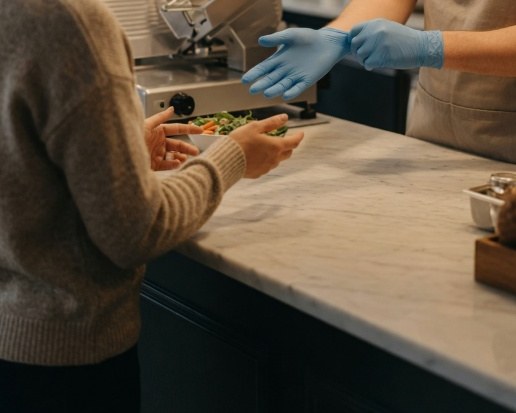
I stopped in for lunch recently at one of those casual places where you can watch your food being made right in front of you. It should feel reassuring. You can see the counter. You can see the ingredients. You can see the gloves. And that is exactly why it felt so wrong when I watched what happened next.
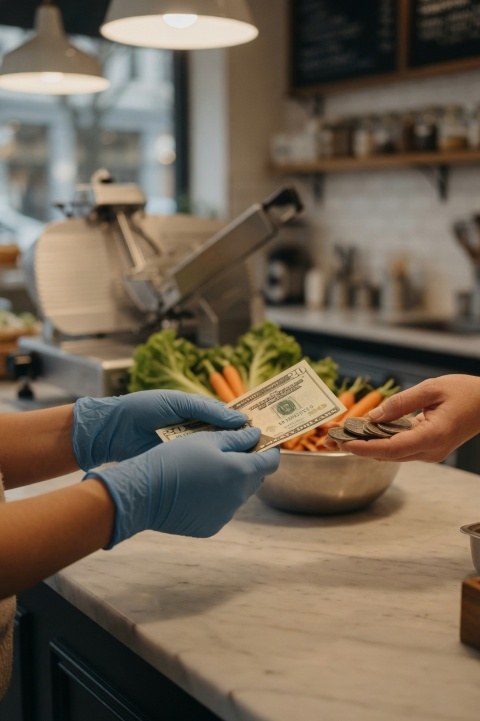
The employee making my order rang up a cash customer at the register — gloves still on — then came right back and started assembling my sandwich. No glove change. No hand wash. No reset. Just the register, then my food.
I said something. It was a little awkward, but I’m glad I did. Because what I witnessed was not a tiny slip in etiquette. It was a real food-safety problem hiding behind the appearance of cleanliness.
The Problem With “Clean-Looking” Gloves
Gloves can make a food counter look safer than it actually is. They give customers a visual cue that says, somebody is being careful here. But gloves are not magic. They are not a force field. They are basically a second skin. Whatever they touch, they carry.
Cash. A register screen. A phone. A dirty counter edge. A sauce bottle. Another order. If the same pair of gloves moves through all of that and then lands on your sandwich, salad, wrap, or pastry, the gloves are no longer protecting you. They are transferring the risk.
The Phone Problem Nobody Wants to Think About
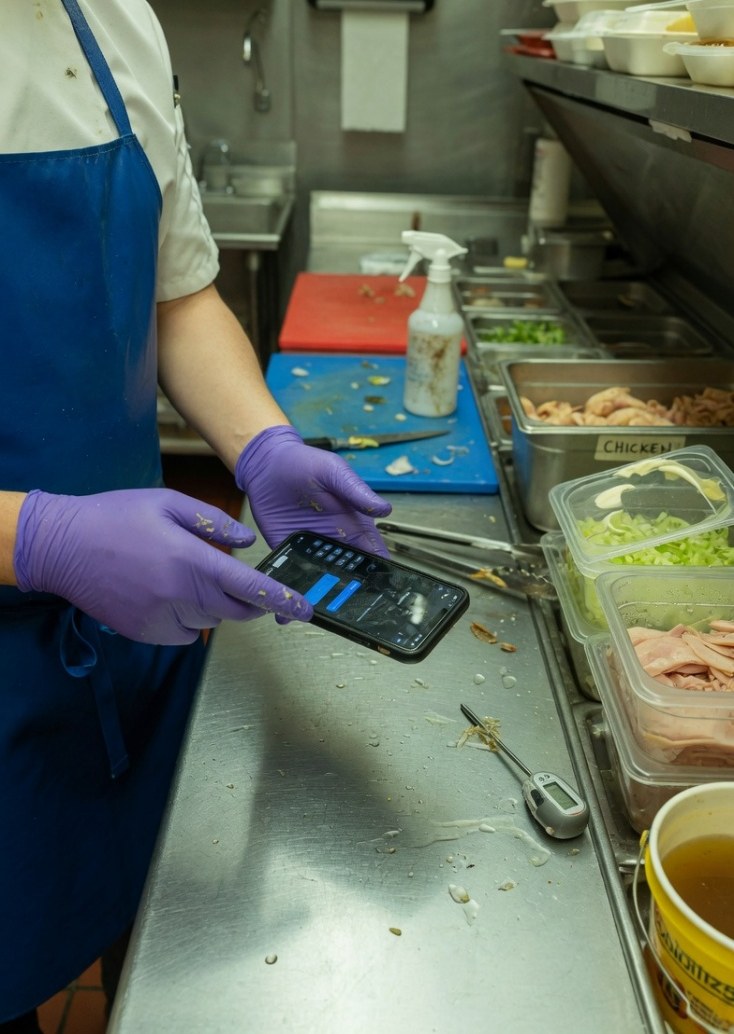
Before we even get to cash, let’s talk about phones. They are one of the most overlooked contamination sources in food service because they feel personal, ordinary, and harmless. But phones go everywhere: bathrooms, counters, cars, gym bags, public transit, pockets, purses, and then back into our hands.
Research has found that phones can carry far more bacteria than people expect. Some reports have found that smartphones can carry more bacteria than many bathroom surfaces. Now picture a food-service worker checking a text mid-shift, then going straight back to your food without changing gloves or washing hands.
The problem is not that someone touched a phone. The problem is that the phone became part of the food-prep chain.
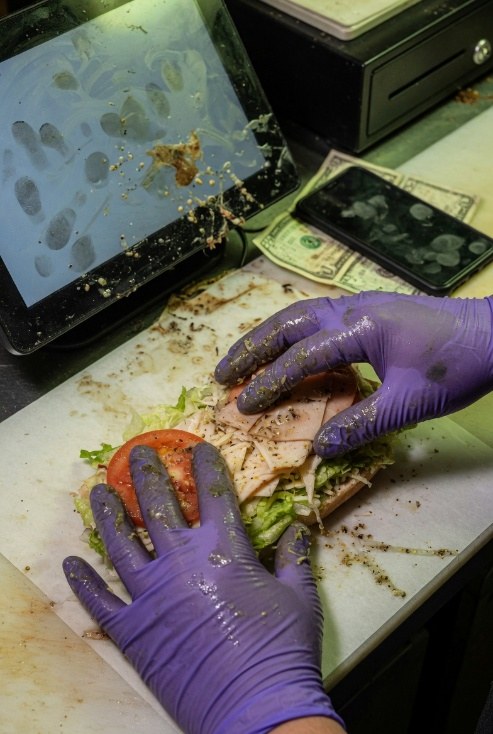
Picture the residue you cannot see. The sauce smear. The sticky spot on the register screen. The greasy edge of the counter. Every one of those points becomes part of the chain when gloves never change. Cross-contamination almost always lives in the small, invisible details.
That is what makes the glove illusion so dangerous. The whole problem is built on what looks fine.
Why This Matters Even More for Allergies and Celiac Disease
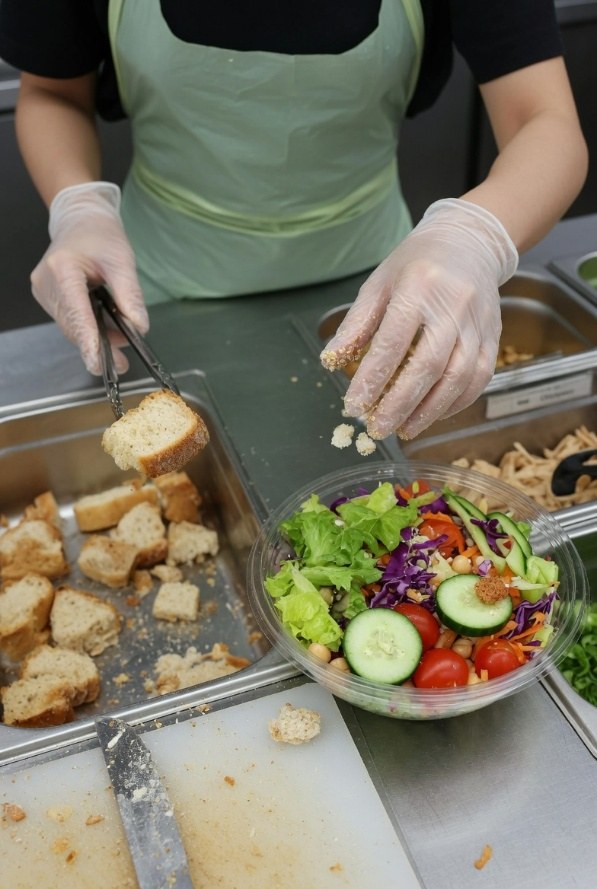
This is not only about germs. For people with severe food allergies or Celiac disease, cross-contact can turn a normal lunch order into a medical situation.
Picture this: an employee builds a wheat-heavy sandwich, touches the register, then starts making a “gluten-free” salad with the same gloves. Nothing looks dramatic. Nothing spills. No one means to do harm. But the contamination has already traveled.
That is what makes cross-contact so dangerous. It is quiet. It is invisible. And it usually happens in the gap between one task and the next.
The Golden Rule: Gloves Are Single-Task Tools
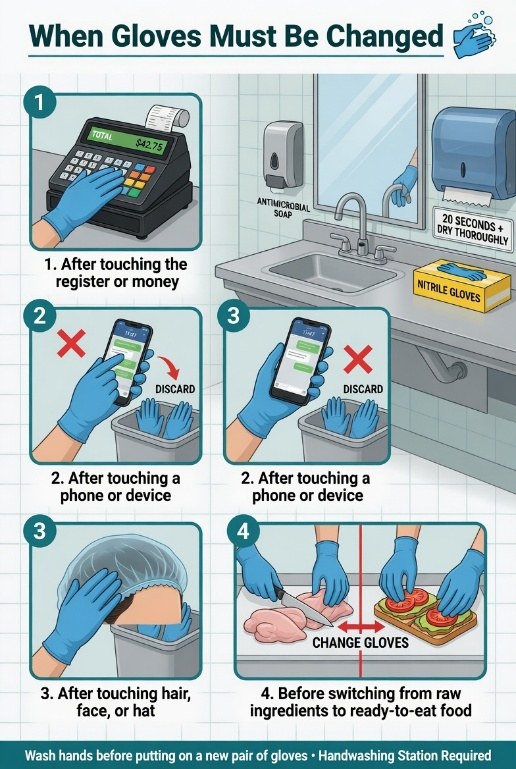
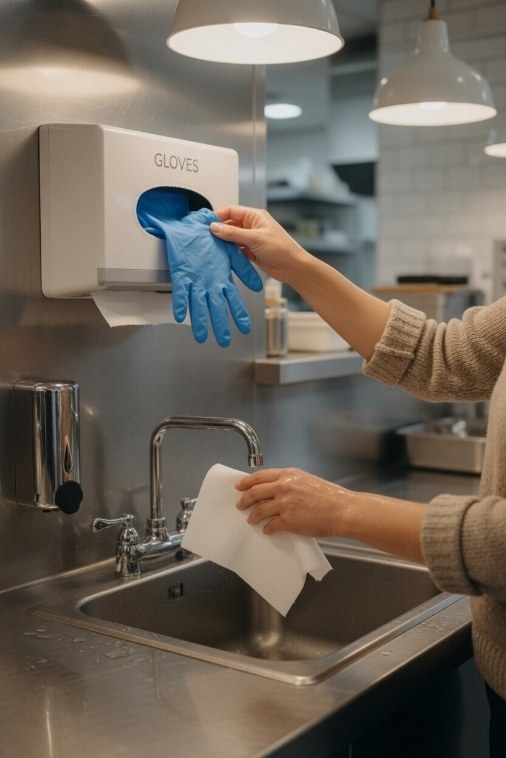
The rule is simple: once gloves touch anything outside the food-prep task, they should be considered compromised. Gloves are useful only when they are changed at the right moments and paired with proper handwashing.
- Handling cash or a register? Gloves off.
- Checking a phone? Gloves off.
- Touching face, hair, clothing, or an apron? Gloves off.
- Switching from raw foods to ready-to-eat foods? Gloves off, wash hands, fresh pair on.
- Moving from one order to another where allergies are involved? Gloves off, wash hands, fresh pair on.
This Is Not About Shaming Workers
The lunch rush is relentless. Anyone who has worked in food service knows that speed, pressure, and constant interruptions are real. This is not about humiliating a worker over one bad moment. It is about the habit. The system. The training. The reflex.
Gloves should not be treated as a symbol of cleanliness; they should be treated as a tool that has to be reset the moment it becomes contaminated.
A Note to Customers: Speak Up
I spoke up, and yes, it was briefly uncomfortable. But it was worth it. A calm request can protect your health without turning the moment into a confrontation. Try this:
I have a severe allergy. Could you please wash your hands and put on a fresh pair of gloves before starting my order?
That is not rude. That is reasonable. The bigger point is this: we have to stop accepting the Glove Illusion as good enough. In food safety, close enough never is.
Further Reading / Source Notes
- CDC: Food Worker Handwashing in Restaurants
- FDA: Safe Food Handling
- FDA: 2022 Food Code
- University of Michigan: Cell phone bacteria overview